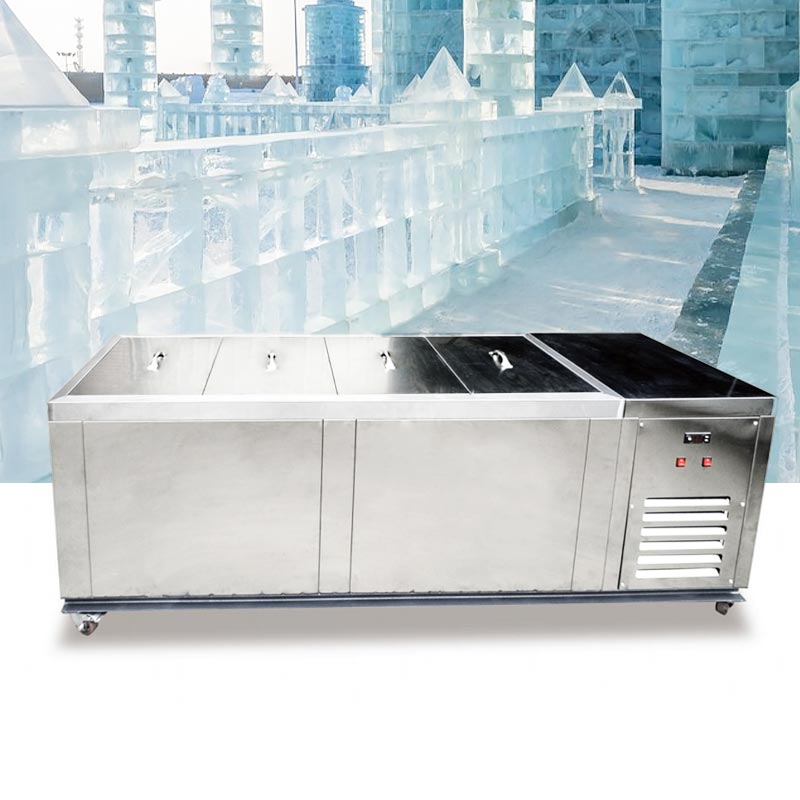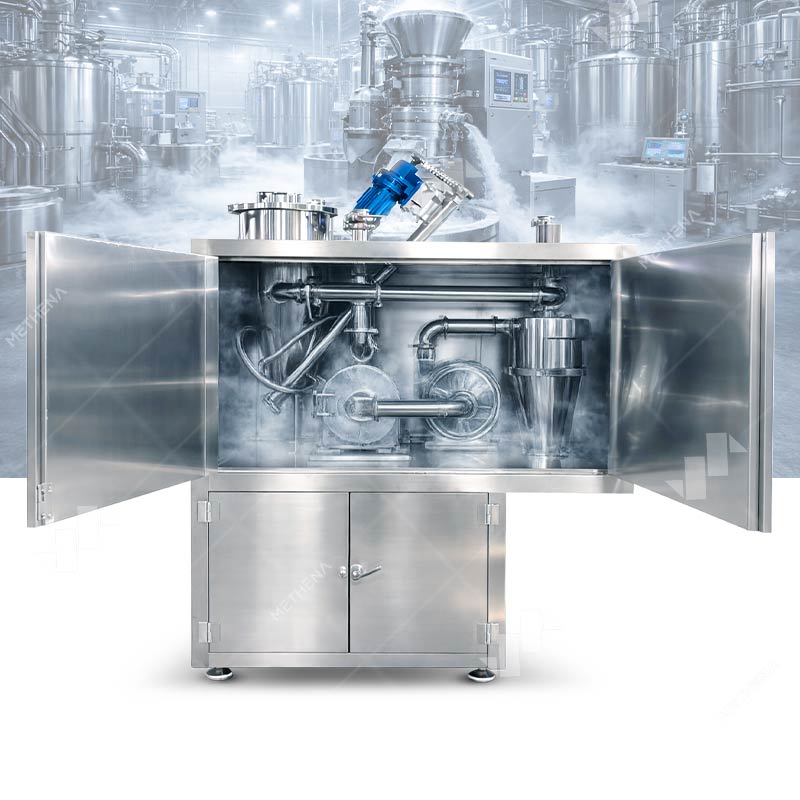
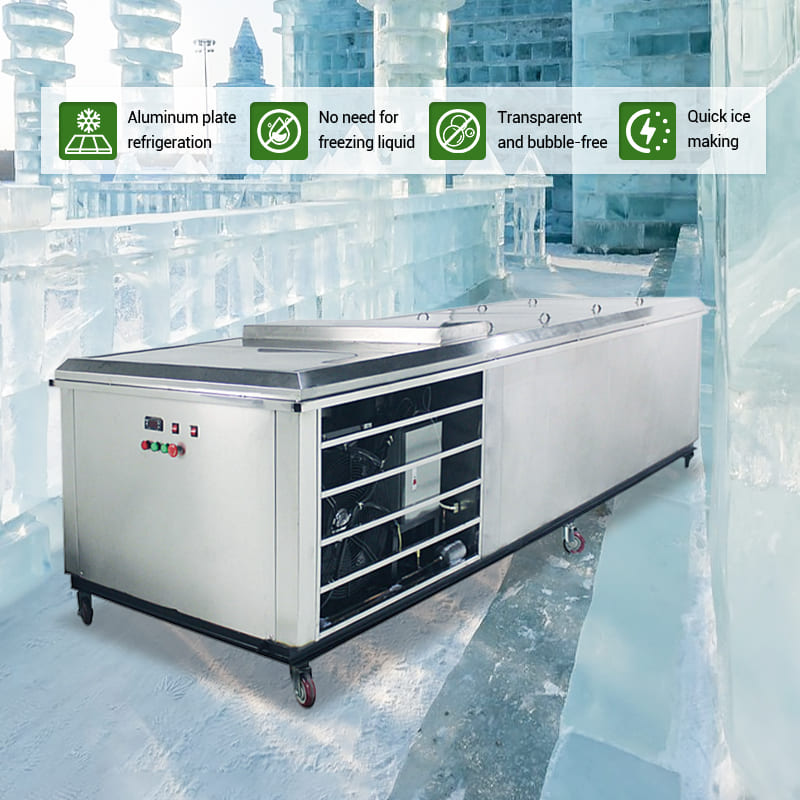
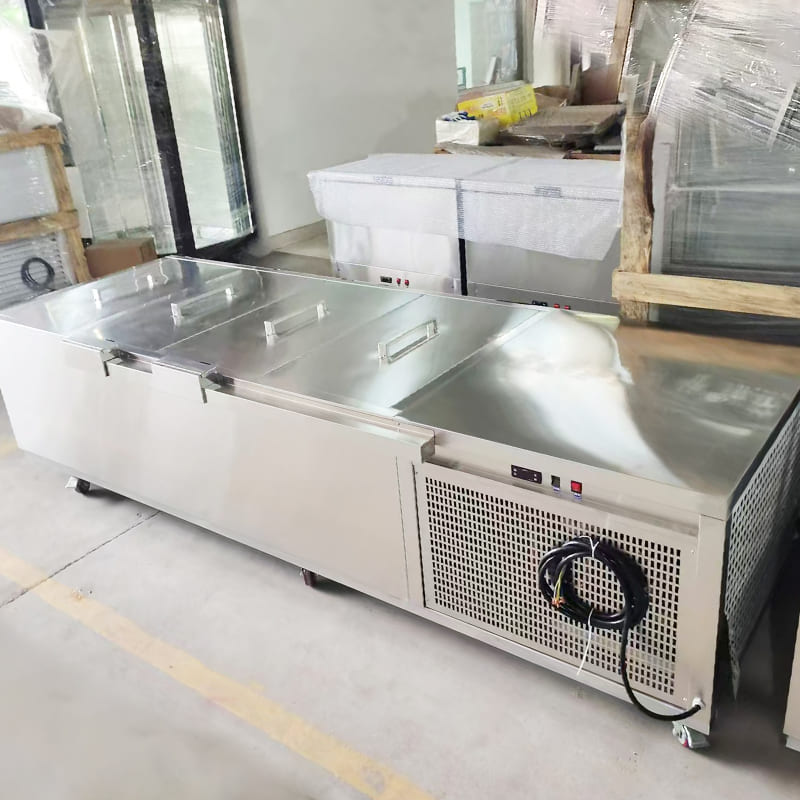
Clear ice is no longer used only for premium cocktails. In modern catering, seafood display, cold chain handling and ice sculpture production, businesses need ice that looks clean, melts slowly and performs consistently. A transparent clear ice block making machine helps bars, restaurants, food factories, event suppliers and ice carving studios produce dense, low-bubble ice blocks with predictable quality.
For companies that use ice every day, the value is not only in appearance. Stable clear ice production reduces dependence on outside suppliers, improves product presentation and gives operators better control over daily ice demand.
| Item | Reference Information |
|---|---|
| Ice Texture | Transparent clear ice |
| Power Supply | Electric |
| Voltage | 220V / 50Hz |
| Reference Power | 850W |
| Cooling Method | Aluminum plate direct cooling |
| Automation Level | Automatic |
| Main Applications | Bars, restaurants, cold chain, food display, ice sculpture |
| Certificates | ISO 9001, ISO 14001, ISO 45001, CE, BSCI, ETL |
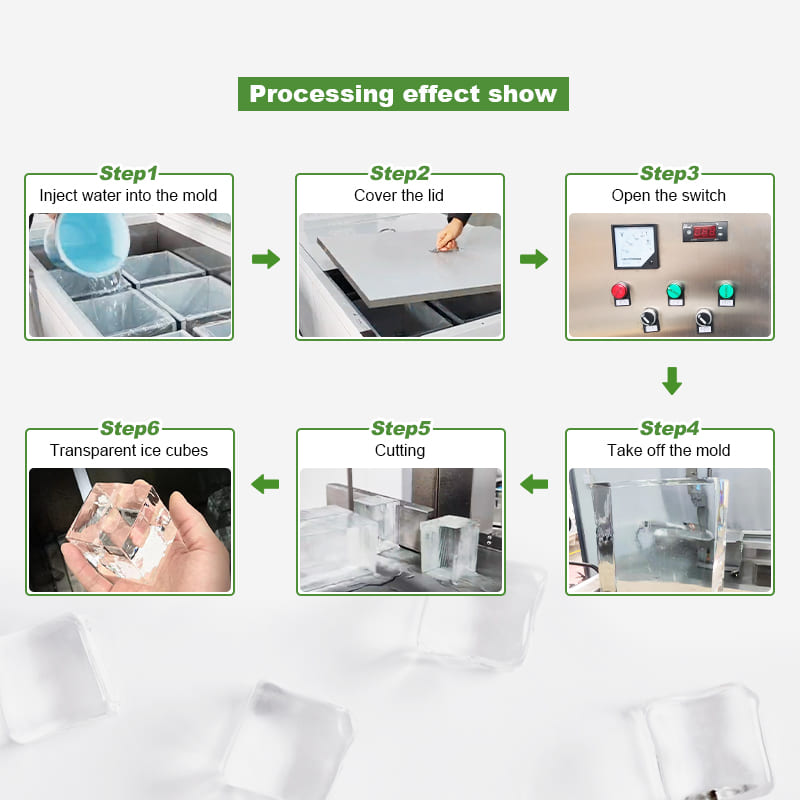
Producing transparent ice is a controlled freezing process. Instead of freezing still water quickly from all sides, the machine guides the freezing direction and keeps water moving during production. This helps air bubbles and fine impurities move away before they become trapped inside the ice.
Water enters the tank, the circulation system keeps it moving, and the aluminum direct-cooling plate removes heat in a controlled way. As the ice layer forms gradually, the block becomes clearer, denser and easier to cut or shape. Automatic control manages cooling, circulation and water level, making the process easier for commercial operators.
A circulation pump continuously delivers water to the base of the freezing chamber at a steady rate, ensuring a constant water level and uniform flow throughout the process, thereby establishing stable hydraulic conditions for unidirectional freezing.
The aluminum plate evaporator begins cooling from the bottom of the ice mold; leveraging the aluminum's high thermal conductivity (237 W/(m·K)), it rapidly establishes a bottom-up, unidirectional temperature gradient, laying the physical foundation for directional crystallization.
Water crystallizes immediately upon contact with the cold aluminum plate, with ice crystals growing upward in a single direction; dissolved air and minerals are continuously "pushed out" of the liquid phase by the advancing ice growth front.
The circulating water flow continuously carries away expelled air bubbles and particulates, while a filtration system traps the particles to prevent impurities from being re-entrained in the ice, ensuring the purity of the ice block and compliance with food safety standards.
The compressor's cooling capacity is precisely matched to the aluminum plate's heat-transfer surface area, locking the freezing rate within the 0.8–1.0 cm/h range—well below the 1.2 cm/h threshold for bubble entrapment—to ensure gases fully escape.
Once freezing is complete, the aluminum plate is briefly warmed to 0–2°C; slight melting at the base allows the ice block to release under its own weight, yielding a transparent finished product with uniform density, no visible bubbles, and a melting rate reduced by 20%–30%.
Rising labor costs, stricter food handling standards and higher customer expectations are changing how businesses manage ice. Buying ice from outside suppliers can work for occasional demand, but it often brings quality variation, transport loss and scheduling pressure.
With an in-house transparent clear ice block making machine, operators can plan production around real demand. For medium-sized food factories, restaurants and ice service businesses, this means better control over cost, timing and final ice quality.
For a single bar or small restaurant, GD-1 or GD-2 is usually easier to fit into limited back-of-house space. For chain catering, seafood display, cold chain supply or ice sculpture production, model selection should consider daily ice demand, block size, working hours, storage method and ambient temperature.
Before requesting a quotation, prepare these details: required daily capacity, target ice block size, water source, local voltage and frequency, installation space, filtration needs and whether cutting or ice storage equipment is required.
Direct-Cooling Aluminum Evaporator:With a thermal conductivity of 237 W/(m·K)—more than 13 times that of stainless steel—the aluminum evaporator ensures a shorter heat transfer path and superior temperature uniformity. This guarantees consistent freezing rates across the entire ice block.
Food-Grade Anti-Corrosion Treatment:Constructed from food-grade, corrosion-resistant aluminum alloy with an anodized surface finish, the system creates a chemical barrier that prevents aluminum ion migration into the ice while maintaining high thermal conductivity. It fully complies with HACCP and ISO 22000 food-contact safety standards.
Intelligent Control System:The control panel operates based on three key parameters: freezing temperature, water level, and circulating water flow rate. Once the target ice thickness (adjustable from 50 to 120 mm) is set, the system automatically calculates the freezing time and initiates the warming and ice-release cycle as soon as the ice reaches the preset thickness, requiring no manual intervention.
Low-Maintenance Cleaning Design:The circulating water loop features a removable filter cartridge that can be taken out and rinsed in just 3–5 minutes. A quick-release side panel design for the freezing chamber facilitates easy evaporator inspection and limescale removal, minimizing unplanned downtime.
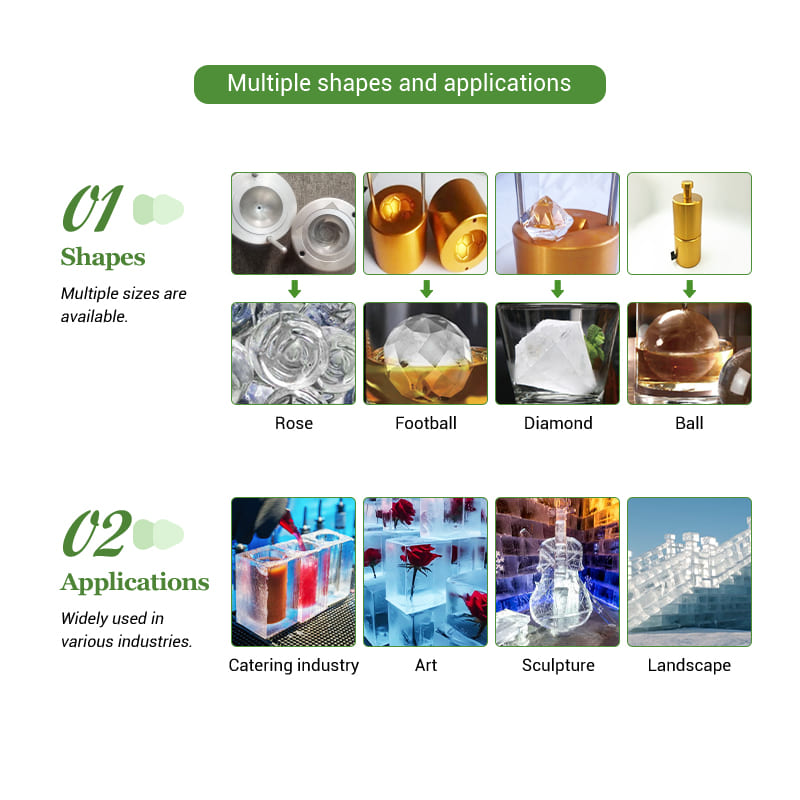
Bars and premium restaurants use clear ice blocks for whiskey ice, cocktail cubes, ice balls and shaped ice.
Central kitchens and chain catering suppliers use the machine to standardize ice quality across multiple outlets.
Food processing plants and cold chain operators can use clear ice for seafood, meat, prepared food, fruit and vegetable freshness control.
Bakery, confectionery and health food brands may use clear ice for chilled display, product launch events, R&D cooling and short-term temperature control.
Ice sculpture studios and event service companies use transparent blocks for carving, frozen flowers, brand displays and decorative installations.
Laboratories and food R&D centers can use small-batch clear ice production for testing, sample cooling and presentation work.
1. What makes transparent ice different from regular ice?
Transparent ice contains fewer bubbles and cloudy areas. It is denser, clearer and usually melts more slowly.
2. Is the machine suitable for food-related use?
Yes. It is suitable for bars, restaurants, food display and cold chain applications. Filtered or softened water is recommended.
3. Does water quality affect ice clarity?
Yes. Low-TDS filtered water generally produces clearer ice and helps reduce scaling inside the machine.
4. How do I choose the right model?
Choose based on daily ice demand, available working hours, installation space and whether you need continuous ice supply.
5. Can the ice be used for carving?
Yes. Dense and low-bubble clear ice blocks are suitable for ice sculpture, frozen flowers and display ice.
6. Is maintenance difficult?
Routine maintenance mainly includes water circuit cleaning, filter inspection and refrigeration system checks.
7. Can voltage or ice size be customized?
Customization should be confirmed according to local power supply, target block size and site layout.











 Request a Quote
 More Products