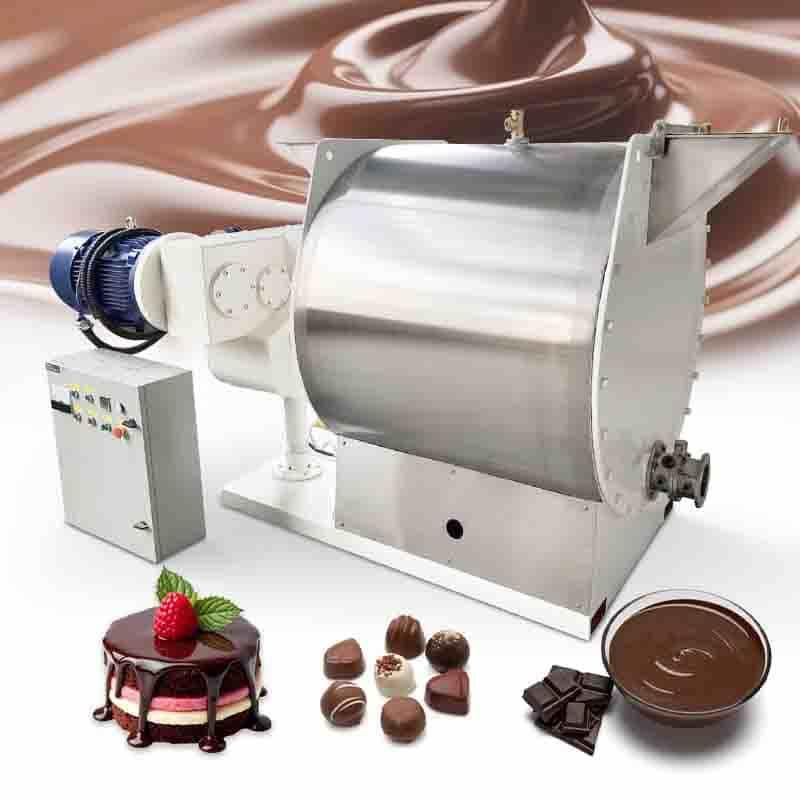
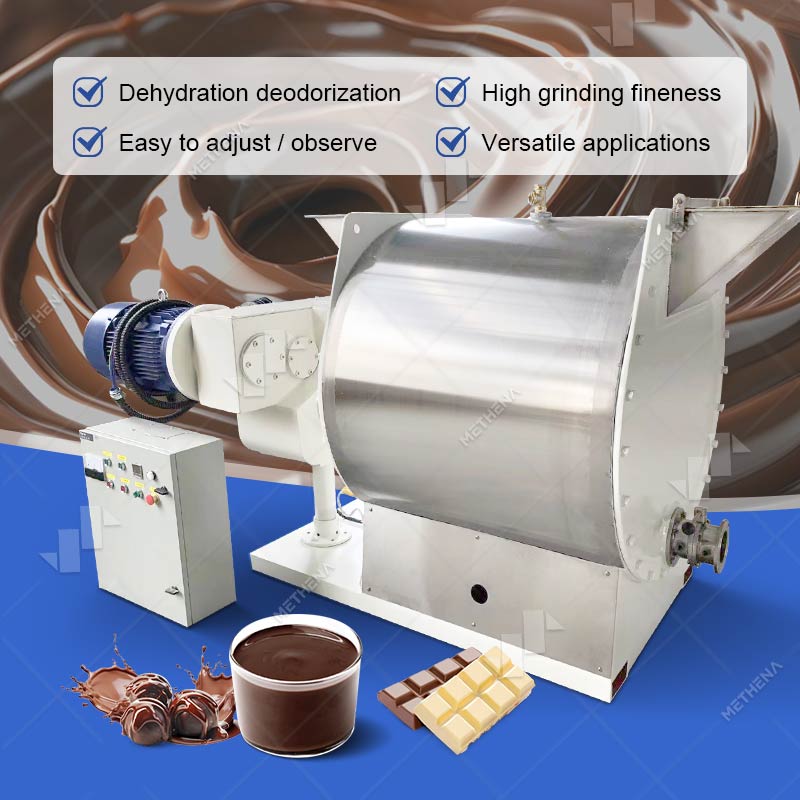
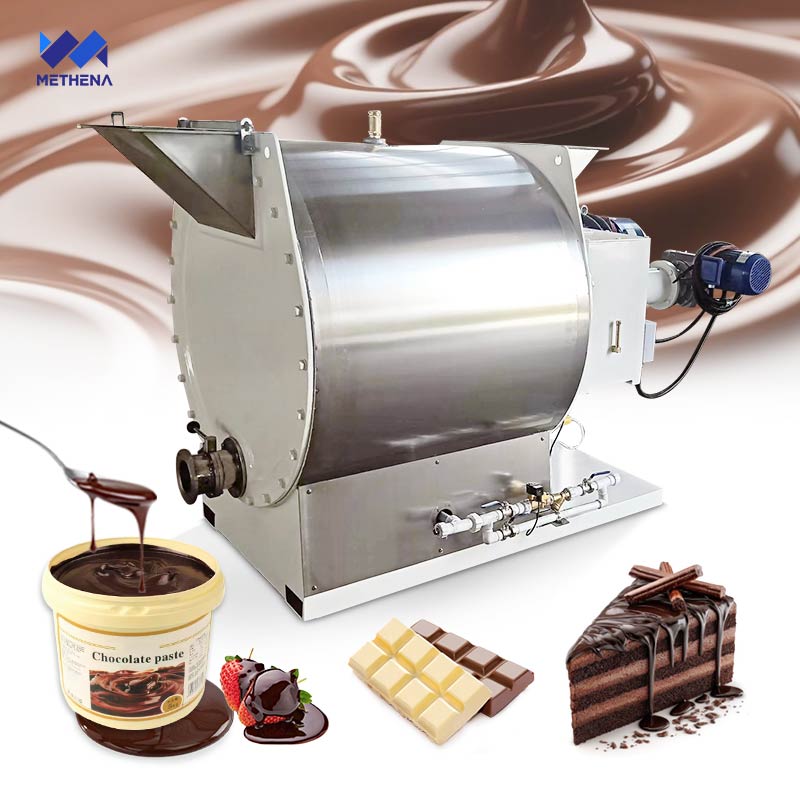
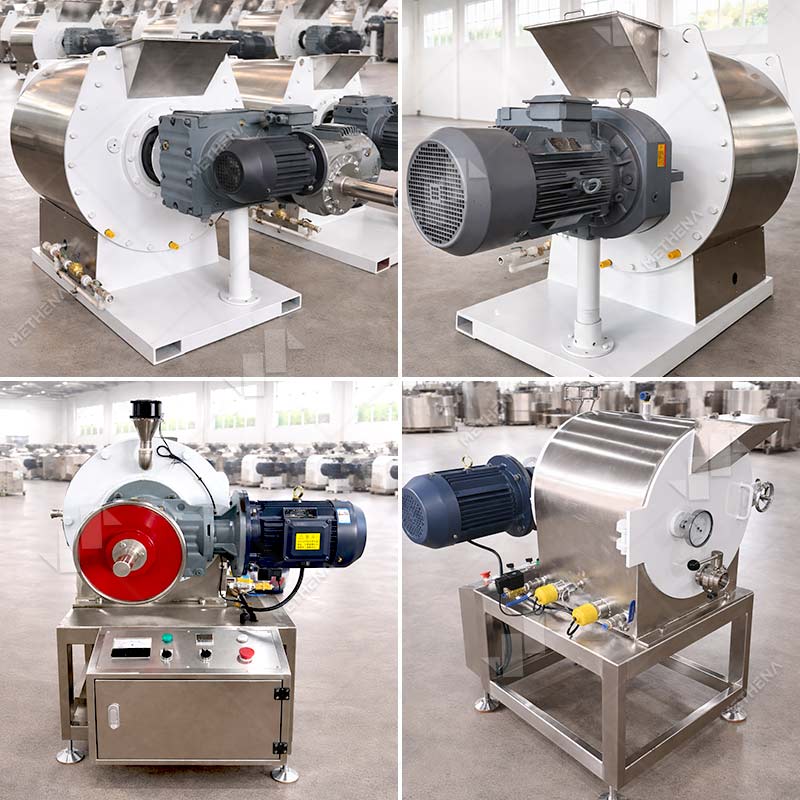
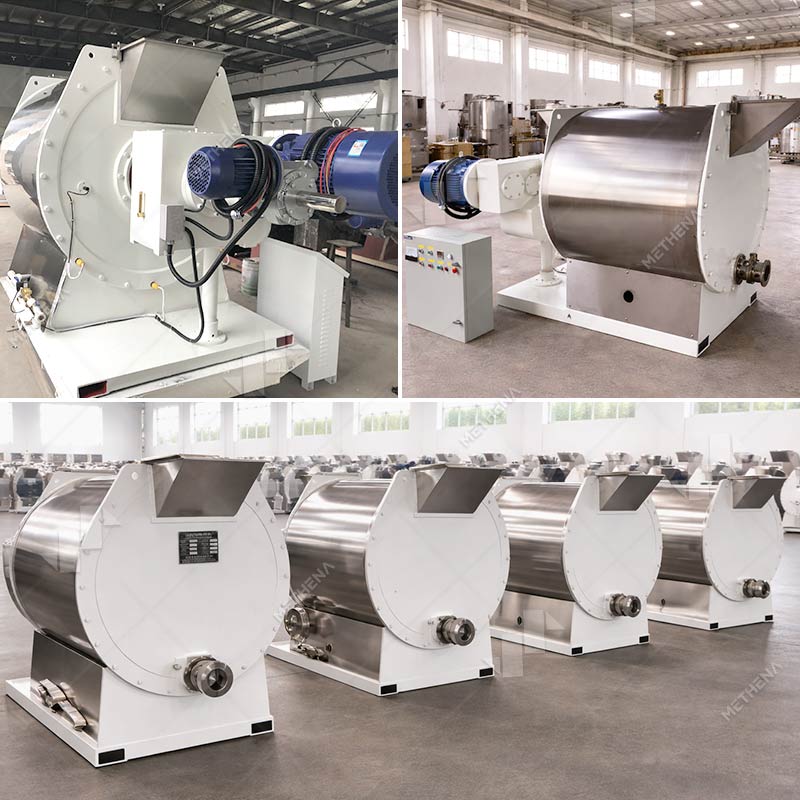
Methena supplies chocolate conching machines for batch production, from the compact JM-40 to the larger JM500 and JM1000 models. Each uses a motor-driven grinding assembly inside a cylindrical chamber, with electrically adjustable grinding pressure. The machines are designed to handle the lengthy refining cycles needed to produce a finer, more uniform chocolate mass.
| Capacity | 20-3000L |
| Fine Grinding Time | 7-24 h |
| Fine Grinding Fineness | 18-25μm |
| Effective volume | 50L or Customized |
| Operating System | Gear system with electrically adjustable grinding pressure |
| Function | grinding chocolate |
| Item | chocolate conche machine |
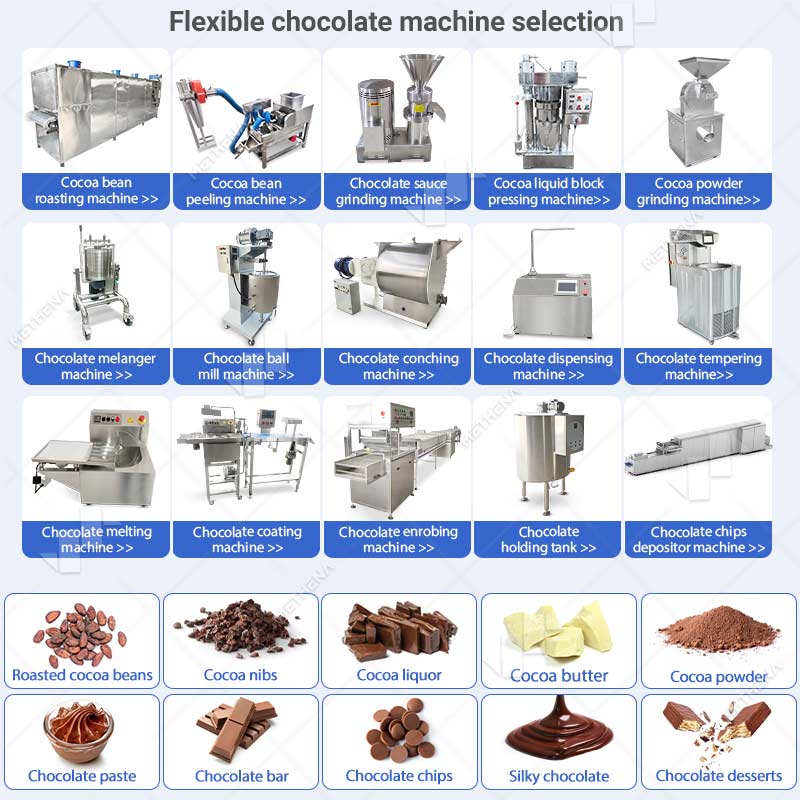
| Related machine | Chocolate Tempering, Melt, Molding Machine |
| OEM/ODM Service | Acceptable |
| Certification | ISO 9001, ISO 14001, ISO 45001, CE, BSCI, ETL |
Getting the right texture is one of the more demanding parts of chocolate making. Even when the ingredients have been thoroughly mixed, coarse sugar and cocoa particles can leave the finished chocolate feeling grainy. A chocolate conching machine helps address this by refining the chocolate mass while keeping the ingredients moving throughout the process.
The available models cover batch capacities from 20 to 1000 liters, with specified grinding fineness ranging from 18 to 25 μm. Alongside chocolate manufacturing, the equipment may also be used for selected fat-based food pastes, provided their consistency and processing requirements are suitable for the grinding system.
Three models are available for different batch requirements. The main differences are processing volume, refining time, motor power and machine dimensions.
| Specification | JM-40 | JM500 | JM1000 |
|---|---|---|---|
| Batch Capacity | 20–40 L | 500 L | 1000 L |
| Grinding Fineness | 18–25 μm | 20–25 μm | 20–25 μm |
| Refining Time | Approx. 10 h | 14–18 h | 14–16 h |
| Grinding Pressure Adjustment | Electric | Electric | Electric |
| Main Power Rating* | 2.2 kW* | 15 kW | 25 kW |
| Blade Adjustment Motor | 0.75 kW | 0.75 kW | 0.85 kW |
| Heating Power | 2 kW | 7.5 kW | 8.5 kW |
| Net Weight | 330 kg | 2900 kg | 3500 kg |
| Dimensions (mm) | 780 × 660 × 1080 | 2500 × 1400 × 1600 | 3050 × 1500 × 1700 |
The JM-40 supplier data lists 2.2 kW as total power, separately from the adjustment motor and heating ratings. Its complete electrical load should be confirmed before ordering.
The best model is not necessarily the machine with the largest chamber. The decision depends on how much chocolate needs to be produced in each batch, how long the refining process takes and how the machine fits into the rest of the factory.
With a loading capacity of 20–40 liters, the JM-40 is suited to smaller chocolate production requirements, recipe development and limited batch manufacturing.
Its dimensions of 780 × 660 × 1080 mm make it considerably more compact than the larger machines. The listed refining time is approximately 10 hours, making batch scheduling an important consideration even at this smaller scale.
The 500L model is designed for larger chocolate batches.
Its stated refining time is 14–18 hours, with a 15 kW main motor and 7.5 kW electric heating power. Producers considering this model should calculate how many batches can realistically be completed within their operating schedule.
The JM1000 offers a maximum chamber capacity of 1000 liters. It has a 25 kW main motor and a reference refining time of 14–16 hours.
The larger processing volume can reduce the number of batches required for a given production quantity, although the actual output depends on operating conditions, product density and the time needed between batches.
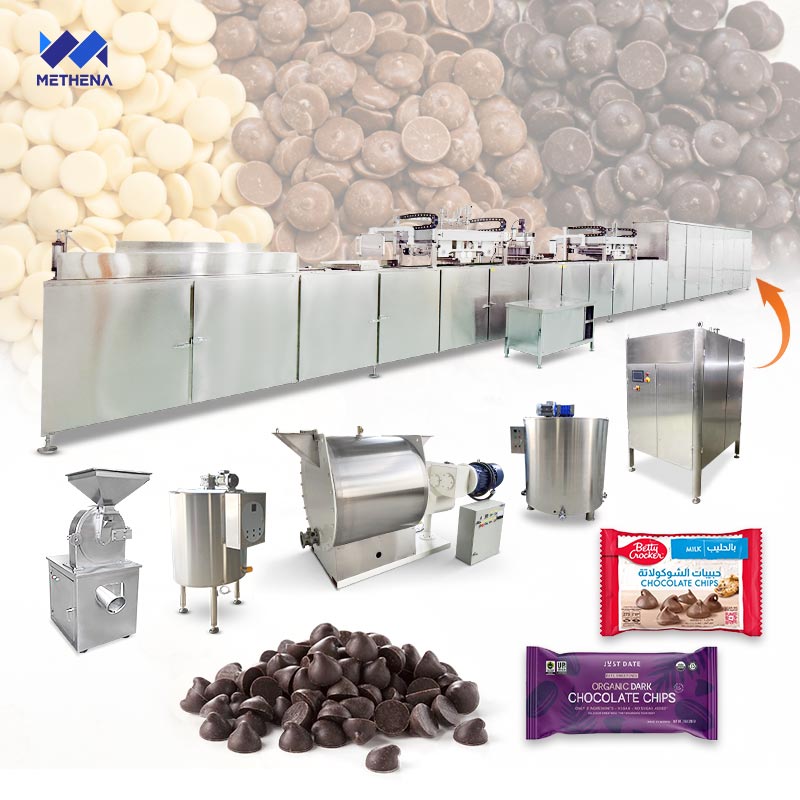
For factories planning to operate several chocolate-processing machines together, refining capacity should be matched with the available storage, tempering and forming equipment.
Chocolate refining takes time because the ingredients need repeated mechanical working, rather than a single pass through the grinding mechanism.
Inside the conching chamber, a rotating shaft drives the grinding assembly. Chocolate mass moves continuously through the working area, where contact with the grinding elements gradually reduces the size of solid particles. At the same time, mixing helps distribute cocoa solids, sugar, fat and other ingredients more evenly.
The machine's grinding pressure can be adjusted electrically. This gives the operator control over the refining action as the batch develops. Temperature management is also important, particularly during longer runs when friction and changes in chocolate consistency can affect processing.
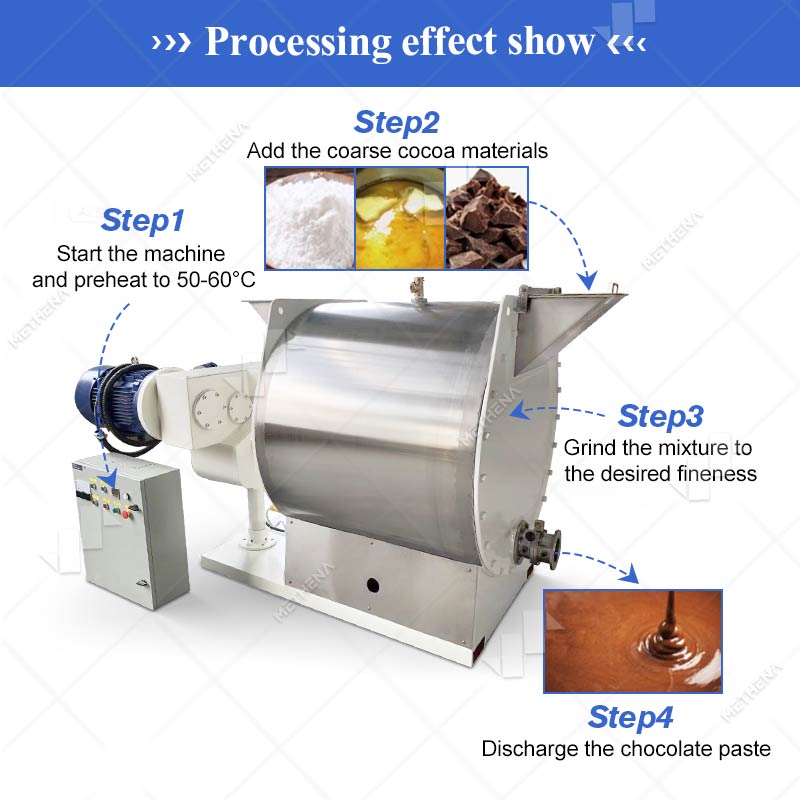
The machine is prepared and preheated before the ingredients are added. The supplied operating procedure gives an initial preheating reference of 50–60°C, although the actual temperature needs to suit the chocolate formulation.
Prepared chocolate ingredients are fed into the chamber through the hopper. For a more predictable refining cycle, the ingredients should be properly mixed and brought to an appropriate initial particle size before loading.
Once the machine is running, the grinding elements repeatedly work the chocolate mixture. Over the course of several hours, coarse particles become finer and the ingredients are distributed more evenly.
Conching can also help reduce moisture and unwanted volatile compounds under suitable processing conditions. The extent of these changes depends on the recipe, temperature and equipment operation.
Rather than judging the batch by time alone, operators should check the chocolate's fineness and consistency during processing. A fineness gauge provides a more useful indication of particle size than appearance alone.
After the required fineness has been reached, the chocolate mass is discharged through the outlet valve.
The refined material can then be transferred to a holding tank or sent for further processing, such as tempering, molding or coating. The transfer arrangement will depend on the layout of the chocolate production line.
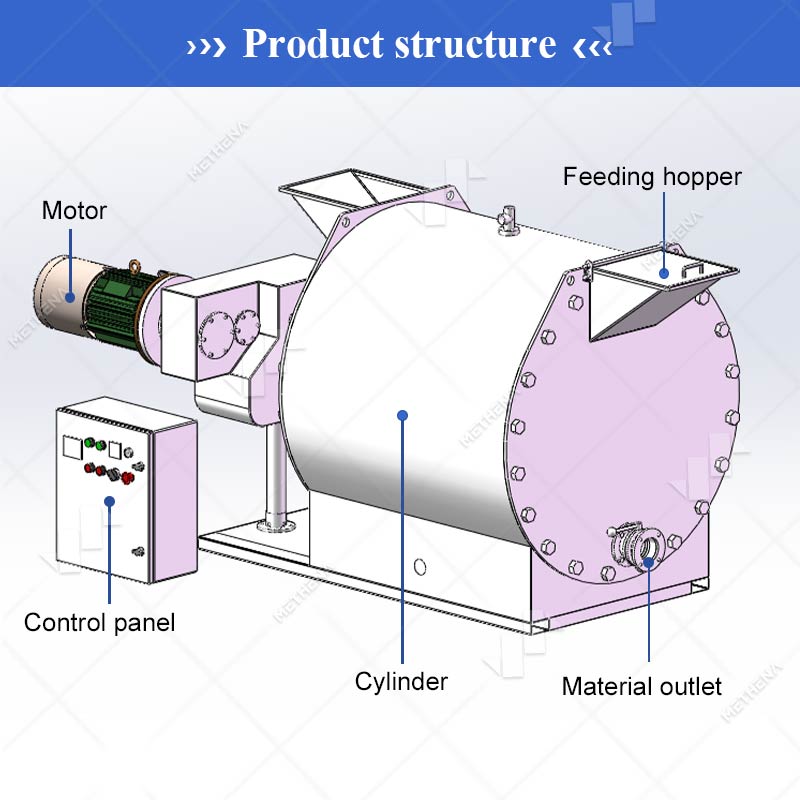
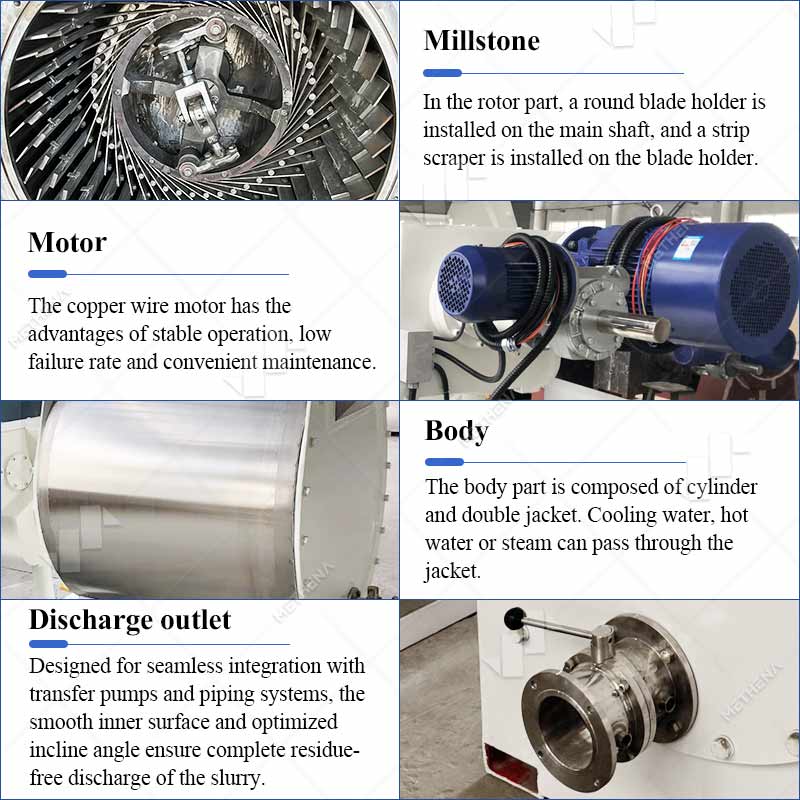
Grinding Blades and Rotor Assembly:The grinding mechanism is built around a rotating shaft fitted with a blade holder and grinding elements. Scrapers help move the chocolate mass through the chamber as the rotor turns.The JM500 and JM1000 models use heat-treated 65 manganese steel grinding blades, according to the supplier specifications. This material is used for components exposed to repeated mechanical contact during refining.Grinding performance depends partly on the condition and adjustment of these components. Worn or incorrectly positioned grinding elements may affect the refining result.
Grinding Pressure Adjustment:All three models have an electrically operated grinding pressure adjustment system.Grinding pressure affects how the chocolate mass is worked between the refining surfaces. Having an adjustable mechanism makes it possible to set the grinding action according to the material being processed.
The appropriate setting will vary with the recipe and the stage of refining. Regular inspection of the grinding mechanism is important, especially during extended production cycles.
Double-Jacketed Cylinder:The processing chamber is constructed with a double-jacketed cylindrical body. The jacket can accommodate heating or cooling media according to the equipment configuration.This arrangement is useful because chocolate needs to remain at a suitable working temperature during refining. If the mass becomes too cool, its viscosity may increase and make processing more difficult. Excessive heat can also affect the ingredients and final product characteristics.The machines have electric heating arrangements, with heating power varying by model.
Motor and Transmission:A motor and gear transmission system drive the internal grinding assembly.The JM-40 uses a 20CrMnTi gear, as specified in the supplier's technical sheet. For the larger models, the main motor ratings are 15 kW and 25 kW respectively.The motor and transmission provide the mechanical movement required to keep the chocolate mass circulating through the grinding area.
Feeding Hopper and Outlet Valve:Ingredients enter through the hopper at the upper part of the machine, while the finished chocolate mass is removed through the discharge outlet.The JM500 and JM1000 are fitted with insulated butterfly-type outlet valves. When the machine is connected to a transfer pump or other downstream equipment, the outlet arrangement should be matched to the piping and production layout.
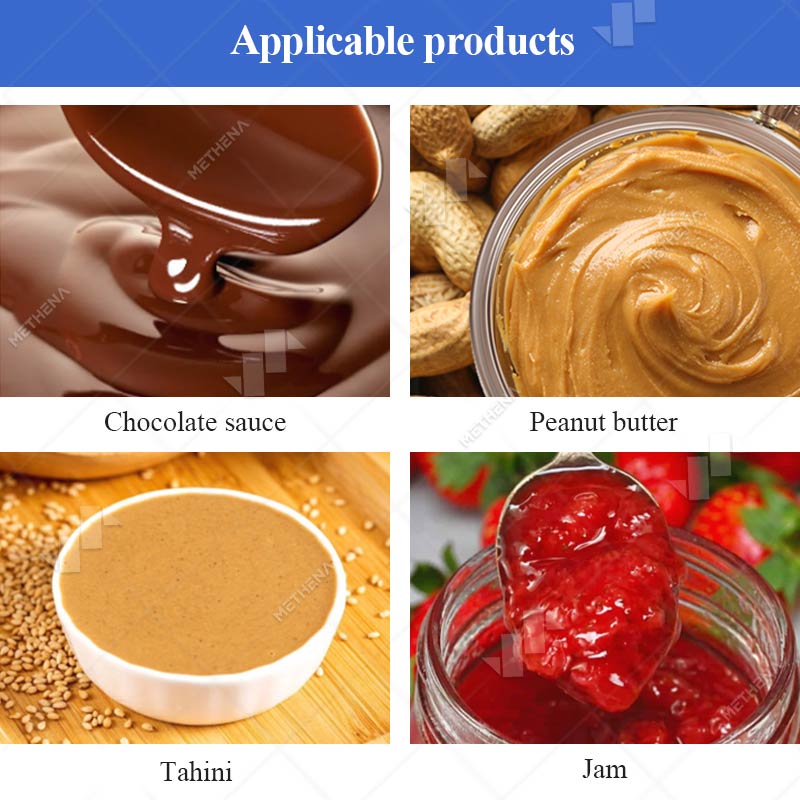
Dark Chocolate:Dark chocolate typically contains cocoa liquor, cocoa butter and sugar. The conching machine works these ingredients together while reducing coarse particles.Refining conditions will depend on the cocoa content, fat level and intended texture of the finished chocolate.
Milk Chocolate:Milk chocolate contains milk solids in addition to cocoa ingredients and sugar. These ingredients need to be properly dispersed and refined to produce a smooth chocolate mass.Temperature selection is particularly important when working with dairy-containing formulations.
White Chocolate:White chocolate contains cocoa butter, sugar and milk ingredients, without the cocoa solids found in dark or milk chocolate.The machine can be considered for white chocolate processing, with refining conditions adjusted to the formulation. Temperature and operating time should be confirmed for the intended recipe.
Compound Chocolate and Coatings:Compound chocolate and fat-based coating formulations may also require particle refining before being used for molding or coating.The necessary fineness and flow characteristics depend on the product and the downstream application.
Nut Pastes and Other Fat-Based Products:The supplied product information also lists peanut paste, almond paste and sesame paste among possible applications.
These materials have different oil contents, viscosities and particle-size requirements. Before using a chocolate conching machine for continuous nut paste production, the recipe and expected processing conditions should be reviewed to establish whether the grinding system is suitable.
Both machines are used in chocolate processing, but they work differently.
A chocolate conching machine uses mechanical grinding and mixing elements to refine the chocolate mass over a batch cycle. A ball mill reduces particle size using grinding media.
The appropriate choice depends on the production process, required fineness, formulation and available equipment.
The JM-40 has a specified fineness of 18–25 μm, while the JM500 and JM1000 are rated at 20–25 μm.
Actual fineness depends on the starting material, recipe and refining conditions. A chocolate fineness gauge can be used to check the result during processing.
The reference refining time is around 10 hours for the JM-40, 14–18 hours for the JM500 and 14–16 hours for the JM1000.
These times may change with the chocolate formulation and the required final particle size.
The equipment can be considered for milk and white chocolate, as well as dark chocolate.
However, the recipes are different, so temperature settings and refining conditions need to be selected accordingly.
This depends on the condition of the incoming ingredients.
If cocoa solids, sugar or other ingredients are too coarse or poorly mixed, preliminary grinding or mixing may be needed before the conching stage.
The machine's application materials include selected nut and seed pastes.
Suitability should be checked according to the material's oil content, viscosity and required particle size. Some products may be better suited to dedicated nut grinding equipment.
Start with the required amount of chocolate per batch and your daily production schedule.
The JM-40 handles 20–40L per batch, while the larger models have maximum capacities of 500L and 1000L. Refining time and downstream equipment capacity should also be considered.










 Request a Quote
 More Products